
Tab Washers
Tab Washers
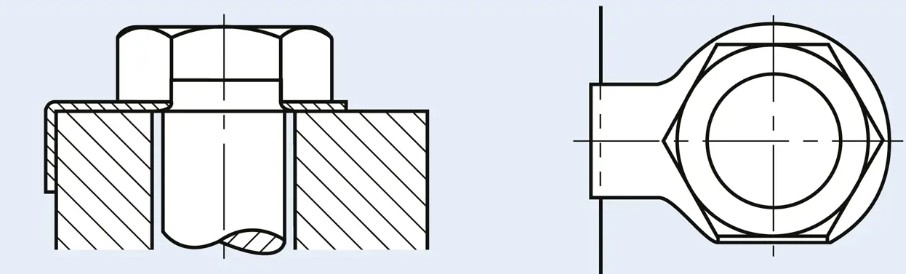
By definition, a Tab washer is a specialised locking washer featuring one or more protruding tabs.
These Washers lock mechanically instead of relying on friction and hence offer more holding power.
Tabs are bent to stop both the fastener and washer from rotating.
Used in applications with moderate to heavy vibration and dynamic loads. They are not reusable because the tabs weaken with repeated use.
They have become essential in the automotive, aerospace and machinery industries.
Using tab washers is a cost-effective solution for preventing fastener loosening. Their simple design and ease of installation make them an economical choice for enhancing the security of mechanical assemblies. By reducing the risk of fastener failure and minimizing maintenance needs, tab washers contribute to long-term cost savings and improved operational efficiency.
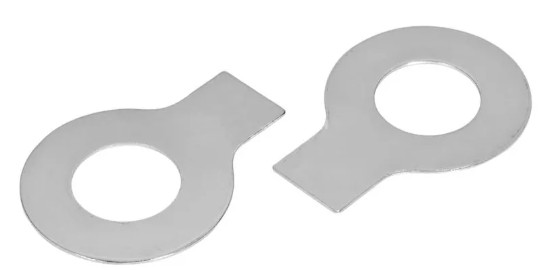 DIN 93 – Tabwasher with one tab
Bend the tab down over the edge of your mounting surface, and bend the side of the washer up against the nut or screw
They are effective in general applications where a simple locking mechanism is required, providing reliable performance and easy installation.
DIN 463 – Tabwashers with 2 tabs
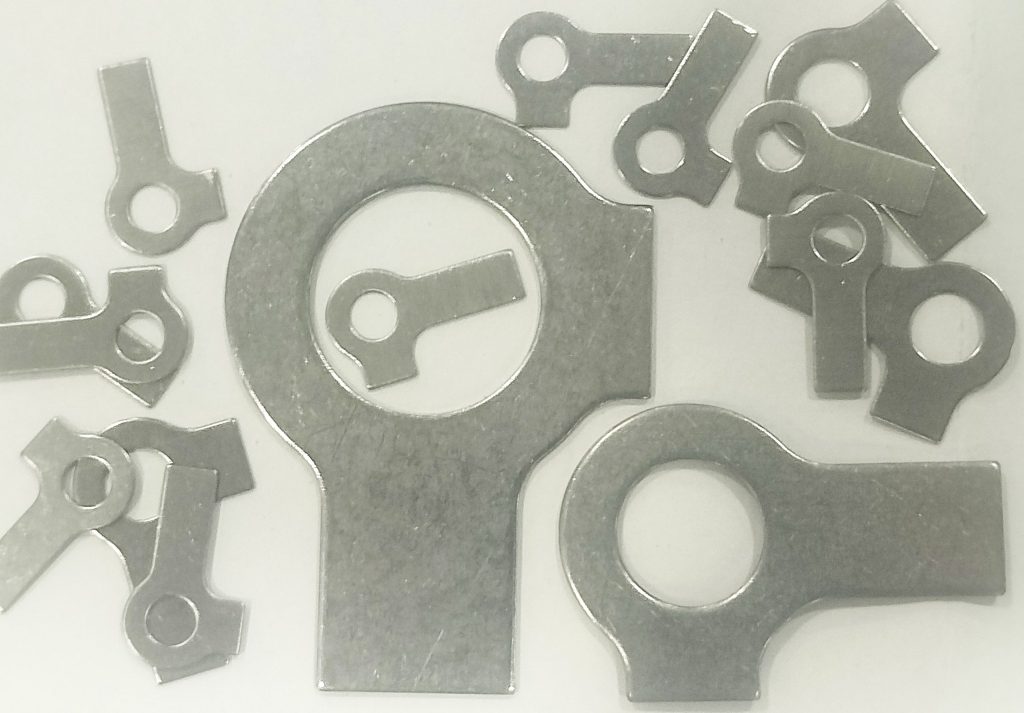
These have two tabs for a more secure hold than washers with one tab. Bend one tab up against the flats of your nut or screw and the other tab down over the edge of your mounting surface.
Ideal for engines and industrial equipment where high-stress conditions are common.
The dual tabs ensure the fastener remains secure even under significant stress.
DIN 463 Tab Washers with two tabs SS-304 A2 B4D08 – Download Datasheet
DIN 463 Tab Washers with two tabs SS-316 A4 B6D08 – Download Datasheet
DIN 432 – Tabwasher with external tab
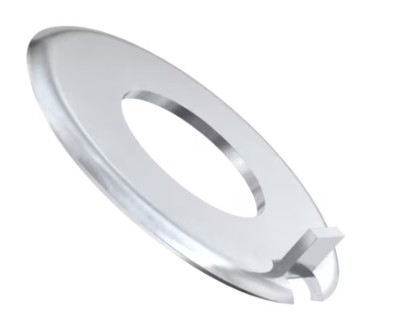
Useful to keep the Nut in place.
These washers are suitable for applications where regular adjustments are needed, offering a convenient locking mechanism that can be quickly engaged or disengaged.
Allowing for easier access during maintenance and inspection.
Installation Tips
Place the tab washer between the bolt head or nut and the mating surface. Ensure the flat side is flush against the mounting surface, with tabs accessible for bending after tightening.
If the assembly requires additional washers, such as a spring washer or a flat washer, place them according to the manufacturer’s specifications. This may involve fitting a spring washer alongside the tab washer on the bolt.
Carefully thread the bolt or nut through the washer and into the mating part, ensuring no cross-threading occurs. Proper threading is vital for secure fastening.
Begin by hand tightening the bolt or nut until snug. This step ensures proper alignment and engagement of the threads.
Gradually tighten the bolt using a torque wrench to the specified torque value. Avoid using impact wrenches or over-tightening by hand, as these can compromise the locking function of the washer.
If the assembly involves multiple bolts, tighten them in a star pattern and in stages to ensure even clamp load distribution.
Locking the Tab Washer
Securing the tab washer is the final step to ensure the fastener remains locked in place.
Once the bolt or nut is tightened to the correct torque, bend the tab washer’s tabs to engage the bolt head or nut, locking the fastener in place to prevent rotation and loosening.
Ensure the tab is firmly bent to bear against the bolt or nut but not so forcefully as to damage the fastener. Proper engagement is crucial for effective locking.
Ensure the tab washer remains flat against the surface without any warping or gaps. Proper alignment ensures consistent locking performance.